Canon R5 or R6 Mark II? A No-Fluff Gear Decision for Bootstrapped Founders
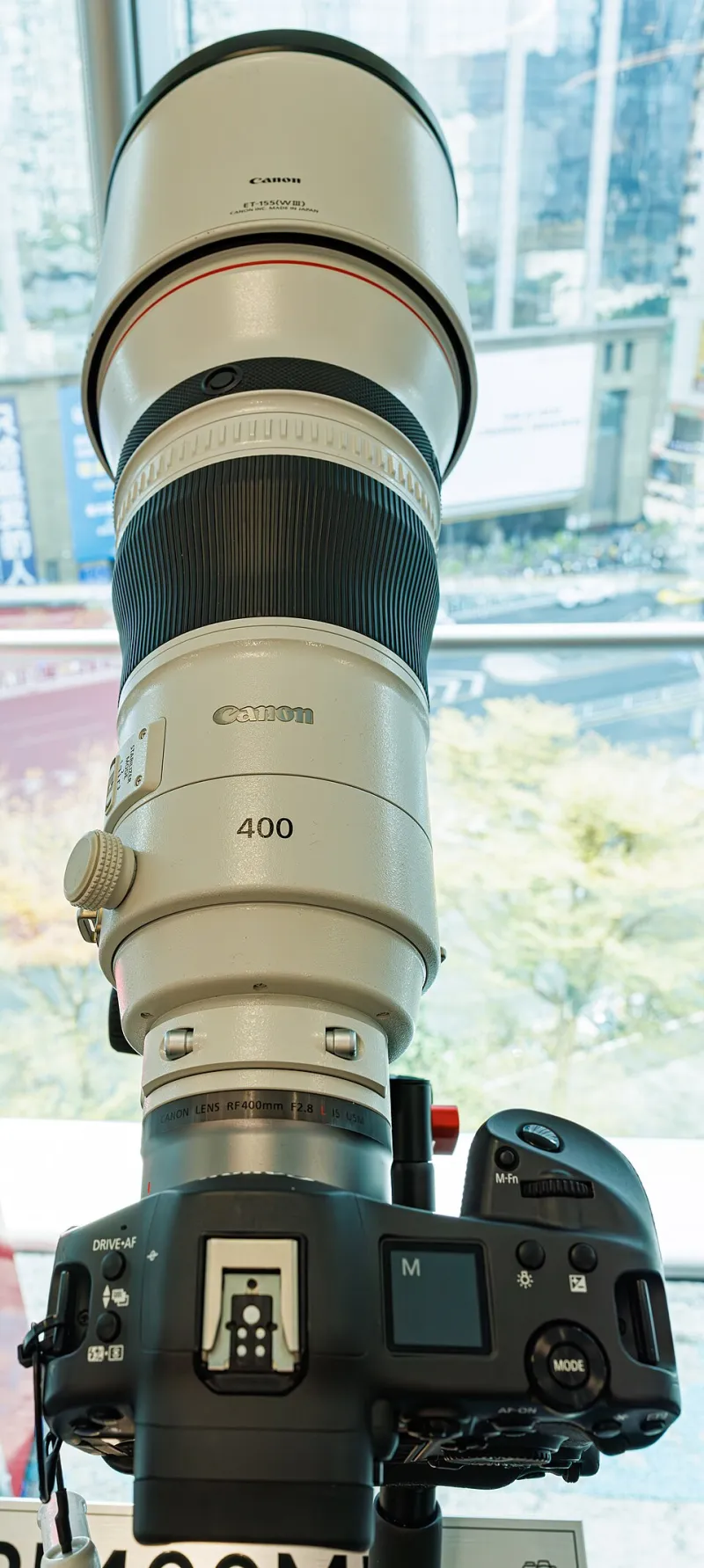
Photo: Dinkun Chen, CC BY-SA 4.0, via Wikimedia Commons
You're pre-launch. Your runway is finite. Every purchase has to pull its weight — including your camera. So when you're staring down Canon's mirrorless lineup and trying to decide between the R5 and the R6 Mark II, the question isn't really "which one is better?" It's "which one is better for where my startup is right now?"
These are two legitimately great cameras. But they serve different founders at different stages, and buying the wrong one early can mean either overspending on features you won't use for 18 months, or underspending and hitting a ceiling right when your content starts gaining traction. Let's sort it out.
What You're Actually Comparing
The Canon EOS R5 sits at the top of Canon's mirrorless consumer lineup — 45 megapixels, 8K RAW video, dual card slots, and a price tag that hovers around $3,800 body-only. The R6 Mark II is the more accessible sibling: 24.2 megapixels, 4K 60fps video, single card slot, and a street price closer to $2,499 body-only.
On paper, the R5 looks like the obvious winner. In practice, for an early-stage founder, the story gets more complicated.
The Personal Brand Creator Scenario
If you're building a personal brand — think thought leadership content, YouTube, LinkedIn video, or an educational platform — the R6 Mark II is genuinely hard to argue against. Its 4K 60fps footage is broadcast-quality for virtually every platform you'll publish to in 2024. The autofocus system, which Canon upgraded significantly in the Mark II revision, tracks faces and eyes with the kind of reliability that makes solo shooting (no camera operator, just you and a tripod) actually workable.
The R5's 8K capability sounds impressive until you realize that 8K editing requires a high-end workstation, massive storage, and a post-production workflow most solo founders simply don't have time to build. You'd be paying a $1,300 premium for a feature that creates more friction than value at launch stage.
For personal brand creators, the R6 Mark II wins on ROI. It's capable enough to grow with you through your first few years, and the savings can fund your lens kit — which matters far more to image quality than the camera body itself.
The SaaS Marketing Team Scenario
SaaS founders often need a broader content mix: product screenshots, team headshots, demo videos, social assets, and the occasional investor-facing visual. Here the calculus shifts a little.
The R5's 45-megapixel sensor gives you serious cropping flexibility — useful when one photo shoot needs to generate assets at a dozen different aspect ratios for web, mobile, and ads. If your marketing team is small and shoots are infrequent, that flexibility reduces the number of times you need to reshoot.
That said, the R6 Mark II's 24.2 megapixels is still more than enough for any digital use case, and it handles high-ISO performance exceptionally well — meaning you can shoot in less-than-perfect office lighting without a full studio setup. For a lean SaaS team that's shooting in a WeWork conference room, that's not a minor point.
Verdict for SaaS marketing: R6 Mark II for most teams. R5 if you have a dedicated visual content manager and a real post-production workflow already in place.
The Creator Economy Startup Scenario
This is where the R5 starts to make a stronger case. If your business model involves licensing photography, producing high-end commercial video for clients, or building a production company alongside your platform, the R5's additional resolution and 8K video ceiling are genuine business assets — not just vanity specs.
Creator economy startups that monetize content directly (stock footage, commercial photography, branded content agencies) can price their deliverables higher when they're shooting with pro-tier specs. In that context, the $1,300 price difference can be recovered through just a handful of premium client bookings.
The Total Cost of Ownership Conversation
Here's the part most camera comparison articles skip: the body is only part of the budget. Canon's RF lens ecosystem is excellent, but RF glass is not cheap. A practical startup lens kit — something like the RF 24-70mm f/2.8L and a 50mm prime — will run you another $2,500 to $4,000 depending on what you choose.
When you add that up, the choice between the R5 and R6 Mark II isn't a $1,300 decision in isolation — it's a $1,300 decision within a $5,000 to $8,000 total system purchase. Choosing the R6 Mark II and putting the savings into better glass is a strategy that professional photographers have used for decades, and it holds up.
Don't forget ancillary costs either: extra batteries (both cameras eat through them during video), a quality SD card or CFexpress card (the R5 uses CFexpress Type B, which is pricier), a gimbal if you're shooting handheld video, and audio gear if you're recording talking-head content.
Autofocus: Closer Than You'd Think
One of the most common misconceptions is that the R5 has dramatically better autofocus than the R6 Mark II. It doesn't — at least not in any way that matters for startup content production. Both cameras use Canon's Dual Pixel CMOS AF II system with subject tracking that covers humans, animals, and vehicles. For 95% of startup use cases, they perform identically.
The Honest Bottom Line
If your startup is pre-revenue or early-revenue and content creation is a means to an end (marketing, fundraising, brand building), buy the R6 Mark II. Redirect the $1,300 into lenses, audio gear, or lighting — all of which will improve your final output more than the extra megapixels will.
If content production is your product, or you're building a creative services business alongside your platform, the R5 is a legitimate long-term investment that won't require an upgrade cycle for years.
Either way, you're building on a solid foundation. Canon's RF ecosystem is deep, the resale value on both bodies holds reasonably well, and the learning curve between them is minimal. The best camera for your startup is the one that ships content consistently — and that's whichever one you can afford to actually use well.