Shutter to Success: Real Photographers Who Turned Canon Gear Into Six-Figure Creative Businesses
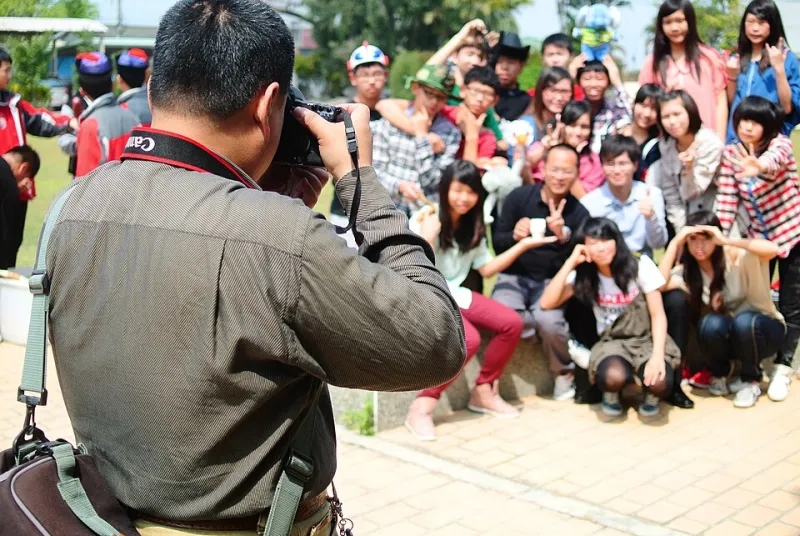
Photo: 褒忠國中 雲端網, CC BY 2.0, via Wikimedia Commons
Shutter to Success: Real Photographers Who Turned Canon Gear Into Six-Figure Businesses
Nobody wakes up a six-figure photographer. There's a version of this story that gets told on Instagram — the golden-hour reel, the packed client calendar, the mirrorless body sitting next to an iced latte. But the real version? It starts with a secondhand Canon body, a few hundred bucks in savings, and a whole lot of figuring it out on the fly.
We tracked down four US-based creative entrepreneurs who built profitable businesses on Canon equipment — and got them to talk candidly about the decisions that actually mattered. Not just the gear, but the pricing strategy, the pivots, and the moments they chose to reinvest in marketing instead of upgrading lenses.
Marcus T., Commercial Product Photographer — Atlanta, GA
Marcus started shooting product photography out of his apartment in 2019 with a Canon EOS Rebel SL2 he picked up refurbished for around $400. His first clients were small Etsy sellers who needed clean white-background shots for under $150 a session.
"I wasn't trying to build a business at first," he says. "I just needed beer money and I had a camera."
The pivot came when a skincare brand in Atlanta hired him for a product launch. He delivered, they referred him, and within eight months he was turning away clients. By 2021, he'd crossed $80,000 in annual revenue — still shooting on that same Rebel body, now paired with a Canon EF 100mm f/2.8L Macro lens he'd saved up for.
His advice on gear upgrades is blunt: "Don't upgrade until the gear is the actual bottleneck. I kept that Rebel until clients started asking why their images looked soft at large print sizes. That's when I moved to the EOS R6. Not before."
The framework he uses is simple — if a gear upgrade would directly unlock a new client tier or service offering, it's worth evaluating. If it's just about wanting nicer equipment, reinvest that money into Google Ads or a portfolio website redesign instead.
Priya S., Wedding and Portrait Videographer — Austin, TX
Priya came out of a marketing career and started shooting wedding films as a weekend side hustle in 2018. She launched with a Canon EOS 80D and a 50mm f/1.8 — a combo she describes as "embarrassingly capable for what I was charging."
Her first year revenue: around $18,000 from twelve weddings. By year three, she'd crossed $120,000 and added two second shooters to her workflow.
The inflection point wasn't a gear upgrade — it was a pricing overhaul. "I was charging $1,200 for full-day wedding coverage and wondering why I was exhausted," she says. "I raised prices to $3,500, lost three potential clients, and booked eight better ones. That math changed everything."
When she finally upgraded to the Canon EOS R5 in 2022, it wasn't for herself — it was to offer 8K footage for a corporate client tier she was building. The gear opened a revenue stream. That's the distinction she draws for anyone evaluating whether to upgrade: does this create a new offer, or does it just make you feel more legit?
Priya also emphasizes the importance of Canon's ecosystem for someone scaling a team. "When I brought on a second shooter, I handed them an 80D. Same menus, same color science. Consistency on a shoot matters more than anyone admits."
Devon and Kayla R., Husband-and-Wife Content Studio — Nashville, TN
This duo built a content creation studio from a shared Canon EOS M50 Mark II and a ring light in their spare bedroom. Their niche: social media content packages for Nashville-area restaurants and hospitality brands.
By packaging still photography, short-form video, and basic graphic design into monthly retainers starting at $800/month, they hit $200,000 in combined annual revenue by their third year.
"Retainers changed everything," Devon says. "One-off shoots are a hamster wheel. Retainers are a business."
Their gear story is a masterclass in intentional scaling. They didn't upgrade cameras until their client roster justified it — and even then, they bought a Canon EOS R8 as a second body rather than replacing the M50 entirely. Today they run a three-camera workflow for larger productions, all within the Canon RF ecosystem for lens compatibility.
Kayla's take on ROI is practical: "Every gear decision should map to a specific deliverable. We bought a Canon RF 24-70mm f/2.8L because it let us offer indoor event coverage without a separate lighting kit. That lens paid for itself in two bookings."
Terrence W., Real Estate and Architecture Photographer — Chicago, IL
Terrence spent twelve years in construction management before picking up a Canon EOS 6D Mark II and teaching himself real estate photography on YouTube. He launched his business in 2020 — yes, during the pandemic — and rode the housing market surge to $95,000 in his first full year.
His secret weapon wasn't the camera. It was a Canon TS-E 17mm tilt-shift lens that let him deliver distortion-free architectural images that competitors couldn't match with standard wide-angle glass. "That lens costs more than my first camera," he admits. "But it made me the only photographer in my market doing true architectural correction in-camera. I raised my rates by 40% the month I bought it."
Terrence's framework for gear ROI is the most structured of the group. He calculates a simple payback period: divide the gear cost by the additional revenue it enables per booking, then multiply by expected bookings per month. If a lens pays for itself in under 90 days, he buys it. If it takes longer than six months, he waits.
The Takeaway: A Framework for Every Creative Entrepreneur
Across all four stories, a few principles keep surfacing:
Start lean, stay lean until it hurts. Every photographer in this group launched with entry-level or mid-range Canon gear and only upgraded when the equipment was a genuine ceiling — not just a source of gear envy.
Reinvest in client acquisition before glass. Marketing, a professional website, and a strong referral network will generate more revenue than a new lens in most early-stage scenarios.
Think in ecosystems, not individual bodies. Choosing Canon early means future upgrades stay compatible. Lenses hold value. Muscle memory on menus matters when you're moving fast on a shoot.
Gear unlocks offers — not confidence. The most dangerous upgrade is the one you buy to feel like a real photographer. The best upgrade is the one that opens a new service tier, client category, or deliverable you couldn't offer before.
The cameras these entrepreneurs started with are still available, still capable, and still launching new creative businesses every day. The gear is the frame. The business is the vision. Build both deliberately.