Stop Buying Glass You Don't Need: A Bootstrapped Founder's Guide to Canon Lenses That Actually Pay Off
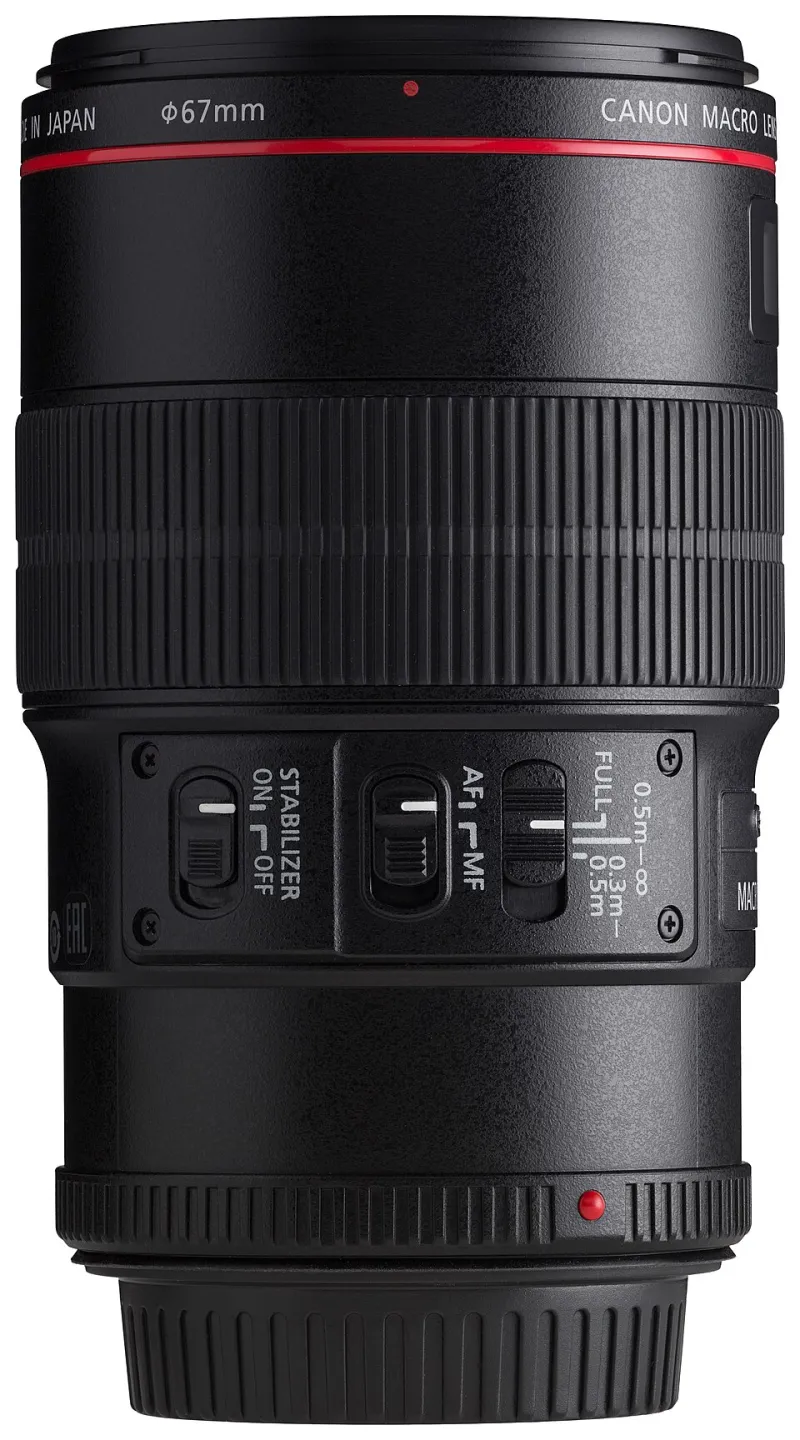
Photo: Lucasbosch, CC BY-SA 3.0, via Wikimedia Commons
Here's a trap a lot of first-time founders fall into: they read a gear review, get excited, and drop $2,400 on a prime lens that looks incredible on paper but doesn't move the needle on any actual business outcome. Six months later, that lens is sitting in a bag while they're wondering why their content pipeline is still a mess.
Lenses are where camera budgets quietly go to die. Bodies get the headlines, but glass is where the real spending decisions compound—for better or worse. If you're building something from the ground up and you're using Canon imaging as part of your visual stack, this guide is about matching lens investments to the work you're actually doing right now, not the dream setup you might want someday.
The Two-Tier Lens Problem
Canon's RF and EF ecosystems are both deep. The RF mount is newer, sharper, and built for mirrorless bodies like the R5, R6 Mark II, and R8. EF lenses—Canon's older DSLR glass—still work beautifully on RF bodies with an adapter, and they often cost significantly less on the used market. For a bootstrapped founder, that distinction matters more than almost any spec comparison.
The mistake most people make is assuming newer automatically means better ROI. It doesn't. ROI comes from the gap between what a lens costs and what it enables you to produce. A $400 EF 50mm f/1.8 STM shot on a used R6 can produce client-ready portraits, social content, and product photography that converts. A $2,299 RF 85mm f/1.2L might be optically superior, but if your current revenue doesn't justify the spend, you're financing someone else's dream gear list.
Matching Glass to Business Stage
Early Stage: Prove the Concept
If you're pre-revenue or in your first year, your lens priority is versatility over perfection. One or two lenses that cover the widest range of use cases will serve you better than a specialized kit you haven't grown into yet.
The RF 24-105mm f/4L IS USM is probably the most honest workhorse lens Canon makes for this stage. It covers wide environmental shots, talking-head video setups, product flats, and event documentation—all in one zoom. Yes, it's $1,099, but if you're doing any kind of client work or content creation, it earns its keep fast. If that's still too steep, the EF 24-105mm f/4L IS II USM with an EF-EOS R adapter runs a few hundred dollars less and delivers optically comparable results for most non-commercial use cases.
For founders who are primarily shooting video content—think YouTube, brand reels, or investor pitch decks with b-roll—the RF 35mm f/1.8 Macro IS STM punches well above its $449 price point. It's compact, stabilized, and the focal length works naturally for on-camera talking setups and lifestyle shots.
Growth Stage: Specialize Where Revenue Justifies It
Once you've got consistent client work or a content revenue stream, you can start adding specialized glass that serves a specific output category.
If portrait or headshot work is driving revenue, the RF 85mm f/2 Macro IS STM at $599 is a smarter buy than jumping straight to the f/1.2L. The rendering is beautiful, the IS helps in tight spaces, and you're not over-leveraging your gear budget on a marginal optical improvement most clients won't perceive.
For product and e-commerce photography—a growing income stream for creative founders serving DTC brands—the EF 100mm f/2.8L Macro IS USM is still one of the best macro lenses ever made, and used copies regularly appear in the $600–$750 range. Paired with an RF adapter, it integrates seamlessly into a modern Canon mirrorless workflow.
Scaling: When L-Glass Makes Business Sense
The Canon L-series lenses—the ones with the red ring and the premium price tags—aren't aspirational buys for most early-stage founders. They become justifiable when the quality gap between your current glass and what clients expect is costing you contracts, or when you're producing content at a volume where marginal optical improvements translate to measurable output quality at scale.
The RF 28-70mm f/2L USM and RF 70-200mm f/2.8L IS USM are the two most versatile L-series zooms for commercial and event work. If you're billing $3,000+ per shoot regularly, either of these starts making financial sense. Below that threshold, you're likely better off reinvesting in marketing, a second shooter, or editing software.
The Used Market Is Your Competitive Advantage
This is worth saying plainly: Canon's EF ecosystem has been around long enough that the used market is deep, reliable, and significantly discounted. Platforms like KEH, MPB, and B&H's used department regularly stock EF glass in excellent condition at 30–50% below retail. For a bootstrapped founder, buying a used EF 50mm f/1.4 USM for $220 instead of a new RF 50mm f/1.8 STM for $199 might sound counterintuitive—until you factor in the optical difference at wide apertures for client portrait work.
The RF adapter ($99–$199 depending on version) is a one-time cost that unlocks the entire EF catalog on any modern Canon mirrorless body. That's a massive library of professional glass at used-market prices. Take advantage of it.
One Budget Scenario, Mapped Out
Let's say you're a solo founder building a personal brand and doing some freelance content work on the side. You've got a Canon R8 body and $800 to spend on glass. Here's how to allocate it:
- Used EF 24-70mm f/2.8L II USM (~$1,100 used) — if budget allows, this is the single best all-purpose lens for client and content work
- OR: RF 35mm f/1.8 Macro IS STM (
$449 new) + Used EF 85mm f/1.8 USM ($300 used) — covers video setups and portrait work without overlap
Either path leaves you with a functional, professional-grade kit that can serve clients and build your portfolio simultaneously.
The Takeaway
The best lens for your business isn't the one with the best DxOMark score—it's the one that closes the gap between what you're producing now and what your clients and audience actually need. Start narrow, buy smart, and upgrade when revenue tells you to, not when a spec sheet does.