Every Dollar You Spend on Canon Gear Could Be a Dollar Back — If You Do This Right

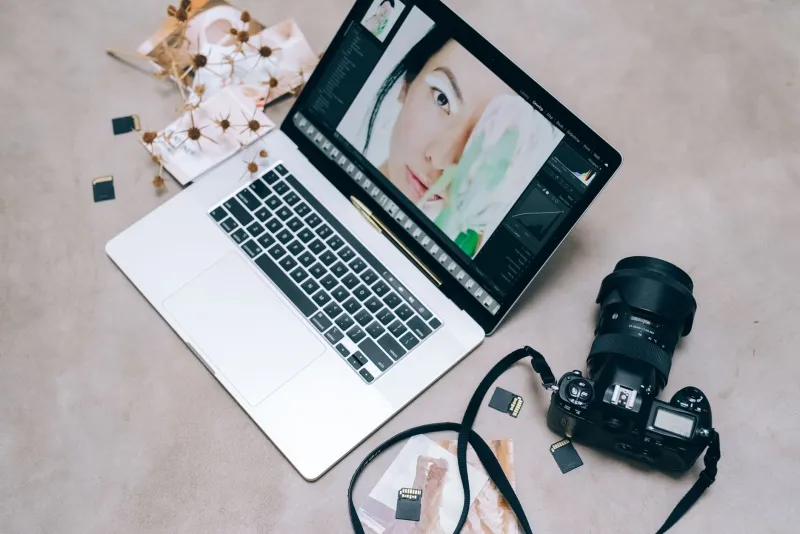
Here's something a lot of first-year founders miss entirely: the Canon R6 Mark II sitting on your desk isn't just a camera. To the IRS, it's a business asset. And if you're treating it like a personal purchase on your books, you're leaving real money on the table every single tax season.
This isn't about finding loopholes. It's about understanding the rules well enough to use them. The tax code actually rewards business owners who invest in their tools — you just have to know how to document the investment correctly.
Let's break it down.
What Counts as a Deductible Business Expense
The IRS standard is pretty simple in principle: a business expense is deductible if it's ordinary and necessary for your trade or business. For a photographer, videographer, content creator, or visual-first startup founder, Canon imaging equipment clears that bar pretty easily.
Here's what typically qualifies:
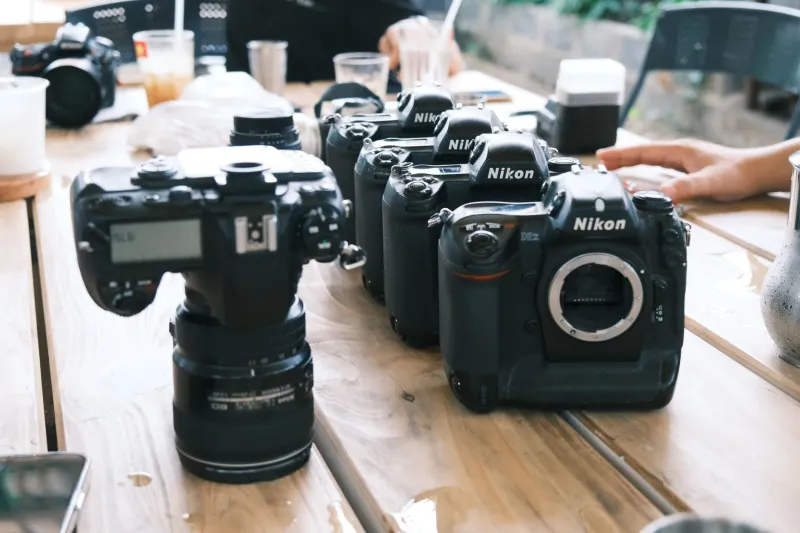
- Camera bodies — Whether it's an entry-level Canon EOS R50 or a flagship R5 Mark II, if you're using it to generate revenue, it's deductible.
- Lenses — RF glass, EF glass with an adapter, cinema lenses. If it's attached to work, it counts.
- Accessories — Battery grips, extra batteries, memory cards, lens filters, straps, hot shoe accessories. These add up faster than you think.
- Storage and workflow gear — Card readers, hard drives for footage backup, editing monitors calibrated for Canon's color profiles.
- Bags and cases — A Pelican case or a camera backpack used to transport gear to client shoots is a business expense.
- Cleaning kits and maintenance — Sensor cleaning tools, lens cloths, moisture protection. Ongoing maintenance is deductible too.
- Software — Canon's Digital Photo Professional, your editing suite, any subscription tied to processing your images.
- Rentals — If you rented a Canon 70-200mm for a specific shoot, that rental fee is a direct expense in the period you incurred it.
The short version: if you bought it to do the work, it's probably deductible.
Section 179 and Bonus Depreciation — Your Two Best Friends
Normally, the IRS wants you to depreciate equipment over several years — spreading the deduction out rather than taking it all at once. But two provisions exist specifically to help small business owners accelerate that deduction.
Section 179 lets you deduct the full purchase price of qualifying equipment in the year you place it in service. For 2024, the deduction limit sits at $1,220,000 — so unless you're outfitting a full production studio on day one, you're well under the cap. A $3,000 Canon body and $2,000 in glass? You can write off the full $5,000 in year one.
Bonus depreciation works similarly, though the percentage has been phasing down — it was 100% in prior years and is currently stepping down annually. Check current rates with IRS Publication 946 or a quick search before you file, since this one changes.
The practical upside: buying gear toward the end of your fiscal year can still deliver a full year's worth of deduction. A camera purchased in November still counts for that entire tax year.
Documenting It Without Losing Your Mind
This is where a lot of founders get sloppy — and sloppiness is what triggers scrutiny. The IRS doesn't just want to know what you bought. They want to know why you bought it and how you used it.
Keep a simple system:
-
Save every receipt — Digital is fine. Create a dedicated folder in Google Drive or Dropbox labeled by tax year. Screenshot email confirmations from B&H, Adorama, or Canon's direct store the moment they hit your inbox.
-
Log business use — If a piece of gear is used for both personal and business purposes, you can only deduct the business-use percentage. A camera used 80% for paid client work and 20% for personal photography is 80% deductible. Keep a simple usage log — even a notes app entry after each shoot works.
-
Connect the gear to revenue — In your records, it helps to note what projects or clients a piece of equipment was purchased to serve. "Canon RF 85mm f/1.2 — purchased for portrait client roster launch, Q3" is a much cleaner paper trail than nothing at all.
-
Separate your finances — If you're still running business purchases through a personal account, stop. Open a dedicated business checking account and business credit card. This single habit makes everything cleaner come April.
The Rent-vs-Buy Question Through a Tax Lens
We've talked about renting Canon gear before from a cash flow angle, but there's a tax dimension worth considering too.
Rentals are immediate, 100% deductible expenses in the period you incur them. No depreciation schedules, no Section 179 calculations — you rented it for a shoot, you deduct it that year, done.
Purchases, on the other hand, give you a larger upfront deduction (especially with Section 179) but tie you to the asset long-term.
If you're in a high-revenue year and want to reduce your taxable income, buying gear strategically before year-end can be a smart move. If you're early-stage and cash flow is tight, renting keeps your tax situation simple while still generating deductions.
Neither is universally better — it depends on your revenue, your tax bracket, and your growth trajectory.
Common Mistakes That Founders Make
Let's talk about what gets people into trouble.
Deducting gear used primarily for personal projects. The IRS isn't trying to subsidize your hobby. If you're writing off a Canon camera but your client revenue is minimal and your Instagram feed is full of personal travel photography, that's a problem.
No documentation of business purpose. A deduction without a paper trail is a deduction waiting to be denied. Document as you go, not retroactively.
Mixing personal and business finances. Beyond making tax prep a nightmare, it creates ambiguity that's hard to defend if you're ever audited.
Forgetting to deduct smaller accessories. Founders often remember the big-ticket items and forget the $40 lens filter, the $80 card reader, the $150 battery kit. These small purchases add up to hundreds of dollars in deductions over the course of a year.
Assuming rent is always the smarter call. Renting is great for cash flow, but if you're renting the same lens four times a year, you've likely spent more than you would have buying it — and you'd have an asset that holds value.
A Note on Working With Professionals
This article is a starting point, not a substitute for a CPA or tax professional. The fundamentals here are solid, but tax situations vary — your entity type (LLC, S-Corp, sole proprietor), your state, your income level, and how you use your gear all affect what you can deduct and how.
What you can do right now is get organized. Pull your receipts together, separate your business and personal accounts, and log your gear usage consistently. When you do sit down with a tax professional, you'll spend less time paying them to sort through chaos — and more time actually strategizing.
The camera on your shelf is already working for your business. Make sure it's working for your taxes too.