Backup Body or Second Prime? The Decision That Could Make or Break Your First Year
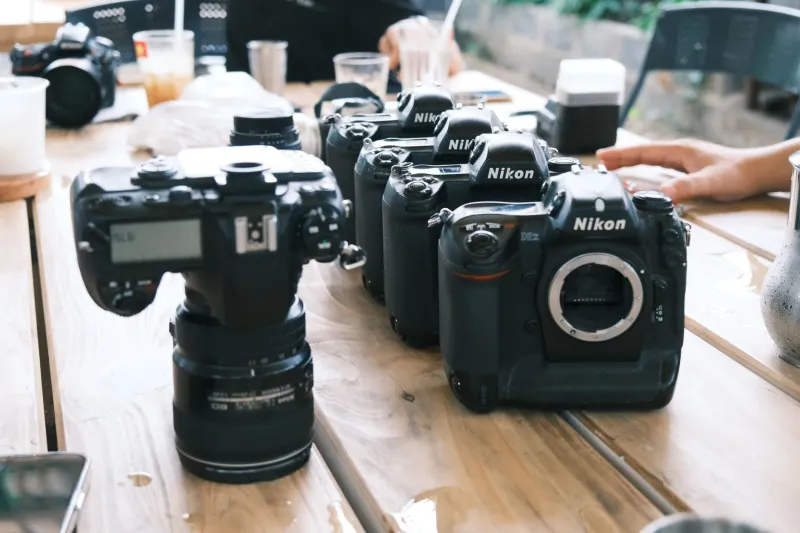
There's a specific kind of anxiety that hits around month three or four of running a creative business. You've got some bookings, a few repeat clients starting to form, and a single Canon body doing all the heavy lifting. Then one day you're scrolling through a gear forum or a Facebook group for photographers, and someone posts about how their R6 locked up mid-wedding. No warning. No recovery. Just a very angry client and a very expensive mistake.
Suddenly, you're not thinking about that 85mm f/1.4 you've been eyeing. You're thinking about redundancy.
But then a week goes by, the anxiety fades, and you're back to daydreaming about the compression on that portrait lens and how it would completely change your headshot packages. And the cycle repeats.
This is the founder's dilemma in its most practical form — and it's one that almost nobody talks about honestly.
Why This Decision Actually Matters for Your Business (Not Just Your Gear Bag)
Here's the thing most gear conversations miss: you're not just choosing between two pieces of equipment. You're choosing between two fundamentally different business strategies.
Investing in a backup body is a defensive play. It protects existing revenue, preserves client relationships, and keeps your reputation intact when something goes sideways — and something will go sideways eventually. Camera bodies fail. Sensors get dust. Shutter actuations run out. Memory cards corrupt. Any one of these on a revenue-generating shoot can end a client relationship permanently and trigger a refund conversation you do not want to have.
Investing in a second prime lens is an offensive play. It expands your creative range, opens up new service offerings, and can justify higher rate cards. A founder who only shoots with a 50mm is leaving certain jobs on the table that an 85mm or 35mm would unlock.
Both are legitimate investments. The problem is most bootstrapped founders don't have the budget for both at the same time — and buying the wrong one at the wrong moment in your business can genuinely set you back.
The Real Cost of a Single-Body Setup Failing
Let's put some numbers to this. Say you've got a $2,500 event booking on the calendar. You show up with one Canon R7, it overheats during an outdoor ceremony in July (it happens), and you lose forty minutes of coverage. Best case, you deliver a subpar product and hope the client doesn't ask for a partial refund. Worst case, you're issuing a full refund, losing the referral, and potentially dealing with a negative review.
That's not a $2,500 loss. That's potentially a $10,000 loss when you factor in future bookings from that client's network.
Now compare that to the cost of a used Canon R50 or a refurbished R8 as a backup body — you can find solid options in the $500–$800 range that share your RF-mount glass. That's a very different risk calculation.
Two founders LaunchFrame spoke with for this piece both learned this the hard way. One, a commercial photographer based in Austin, skipped the backup body purchase in favor of a Canon RF 85mm f/2 because a big portrait package was on the horizon. Three months later, her primary R6 Mark II developed a shutter issue the week before a $3,200 corporate headshot day. She had to scramble, rent a backup at the last minute (adding cost and stress), and the rental shop's body had a slightly different color profile that complicated her post-production. The lens sat in her bag unused for that entire shoot.
Another founder, a videographer in Atlanta, made the opposite call and bought a used R6 as a backup before expanding his lens kit. Six months in, he had to pull that backup out for a real job when his primary developed an autofocus issue mid-project. The backup paid for itself in one afternoon.
The FOMO Factor Is Real — And It's Costing You
Let's be honest about the psychological side of this. Gear FOMO is a very real force in creative communities, and it's specifically engineered by the way gear gets discussed online. YouTube reviews, Instagram flat lays, Reddit threads — they're all optimized to make you feel like you're missing something by not having the next lens.
Backup bodies don't photograph well. Nobody makes a YouTube video called "I Bought a Used R8 as Insurance and Nothing Happened, Here's the Footage." But that's actually the win. The absence of a disaster is the whole point.
The founders who struggle most with this decision are usually the ones who are most plugged into gear communities. The ones who step back and think about it from a pure business risk perspective tend to make the call that actually protects their income.
A Simple Framework for Making the Call
Here's a quick way to think through it depending on where you are in your business:
Buy the backup body first if:
- You have paid bookings on the calendar in the next 90 days
- Your current body is your only piece of shooting hardware
- You're doing event, wedding, or live-action work where you can't reshoot
- Your client contracts don't include clear rescheduling provisions for equipment failure
- You're operating without a local rental house that can bail you out same-day
Buy the second prime first if:
- You have a specific, confirmed booking that requires a focal length you don't own
- Your current body has low actuations and is under warranty or recently serviced
- You shoot primarily in controlled environments (studio, product, portraits) where a reshoot is feasible
- You already have a reliable rental relationship as a safety net
- The new lens would directly unlock a higher-priced service tier you've already been turning clients away from
The Middle Path: Used Bodies and Rental Relationships
If you're genuinely stuck, there's a third option that a lot of founders overlook: a used or refurbished Canon body in the RF ecosystem doesn't have to be a massive investment. Canon's own refurbished store, plus reputable dealers like KEH and B&H's used department, regularly have RF-mount bodies in the $400–$700 range that can serve as a competent backup without blowing your lens budget.
Pairing a modest backup body purchase with a standing rental account at a local shop gives you the best of both worlds — you've got immediate redundancy for most scenarios, and you can rent specialty glass for the specific jobs that need it rather than committing to a purchase before you've proven the demand.
The Bottom Line
There's no universally right answer here, but there is a wrong process — and that's making the decision based on what's exciting rather than what your business actually needs right now. Pull up your booking calendar, look at the next 60 to 90 days, and ask yourself what failure would actually cost you. Then ask what opportunity you're genuinely leaving on the table without that second lens.
One of those answers is probably louder than the other. Trust it.